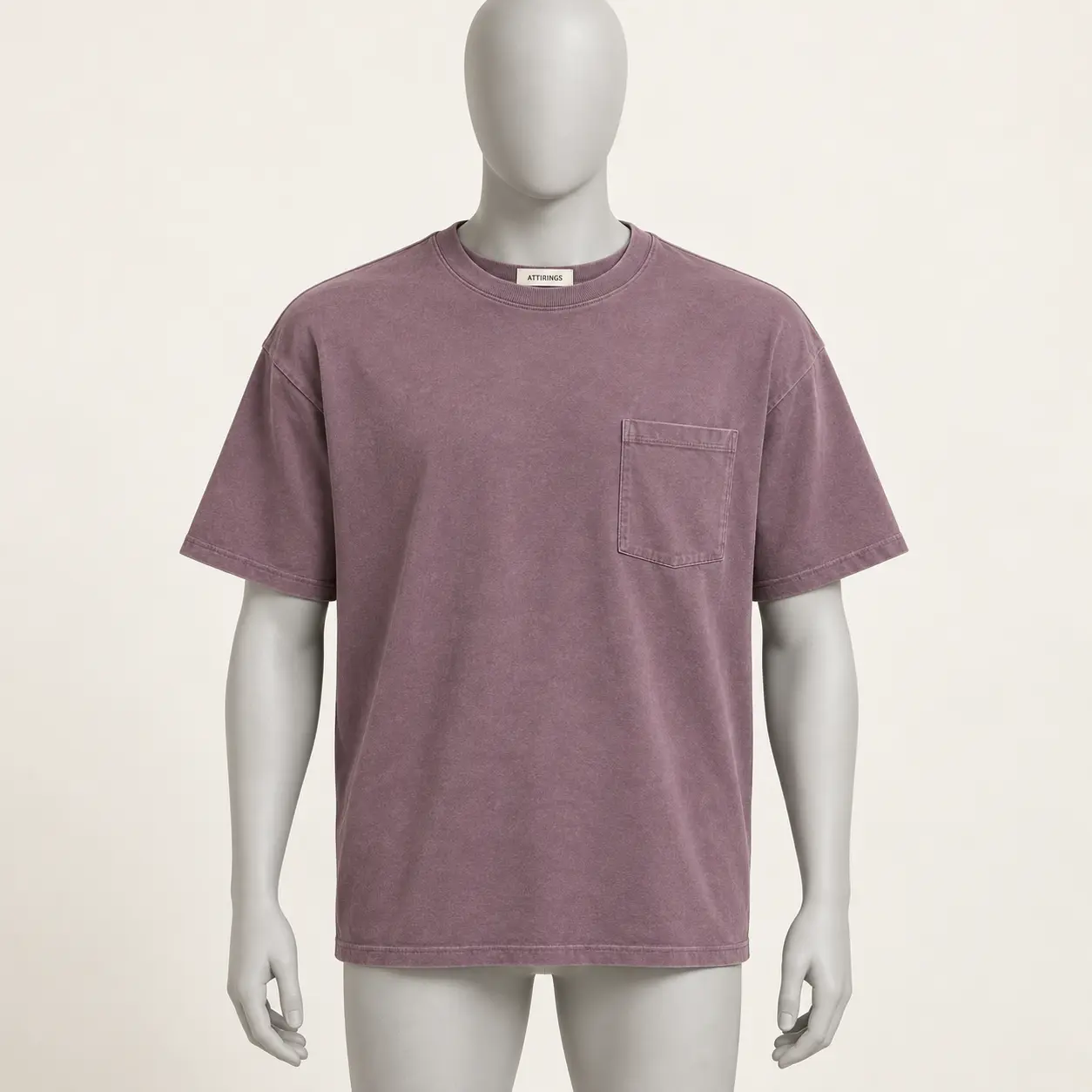
How to Dry T-Shirts Without Unnecessary Stretching
To dry a T-shirt without unnecessary stretching, follow its care label and support the garment while it is wet. Wet fabric can be heavier and easier to distort, particularly at the neckline and shoulders. Avoid wringing, pulling or hanging a heavy shirt from narrow points unless the instructions and construction support that method.
Read the drying instruction first
The fibre name alone does not determine safe drying. Prints, trims, blends and finishing can change the instructions. Check the care symbols and written guidance before choosing a dryer, line, hanger or flat surface. If tumble drying is permitted, use the stated setting rather than selecting high heat by habit.
Remove excess water gently
After washing, lift the shirt with both hands instead of pulling it from one sleeve or the neck. Do not twist it into a rope. If the care instructions allow gentle handling, arrange the shirt so excess water can drain without stretching a single area.
Choose a supported drying position
For flat drying where permitted, place the shirt on a clean, colour-safe drying surface with airflow. Shape it to its normal outline without pulling it larger. Align the shoulders, sleeves and side seams, then leave space around the garment.
If line or hanger drying is permitted, distribute the weight. Avoid a thin hanger that pushes points into wet shoulders. Do not clip a heavy shirt from one small area where the fabric can lengthen.
Keep the garment in proportion
- Smooth the body lightly without stretching the width or length.
- Return the neckline to its natural shape.
- Place sleeves symmetrically rather than leaving one hanging lower.
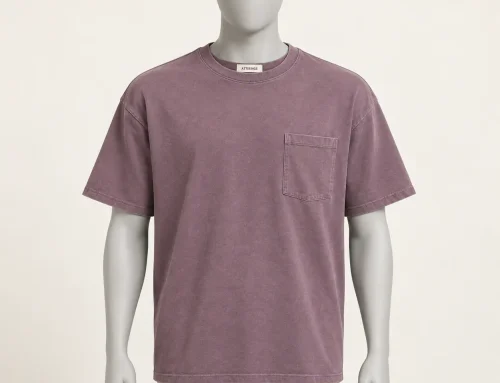
- Check that a pocket or print is not folded onto itself.
Do not store a damp shirt
Check thick seams, neck rib and any pocket before folding. These areas may remain damp after the body feels dry. Give the garment additional airflow rather than packing it away early.
Record sample changes
For a product test, measure chest width and body length before washing. Follow the stated wash and dry method, let the shirt fully dry and relax, then repeat the measurements. Photograph the neckline, shoulders and side seams in the same position. This helps separate a care-process issue from an original construction issue.
Avoid universal claims
Air drying is not automatically correct for every T-shirt, and tumble drying is not automatically prohibited. The garment label remains the first instruction. Where a decorated shirt has additional guidance from the printer or embroiderer, retain it with the product record.
Browse men’s T-shirts and use our fabric-weight guide when comparing samples.
About the author : attirings@gmail.com

Related Posts