How to Assess Jogger Cuff Comfort
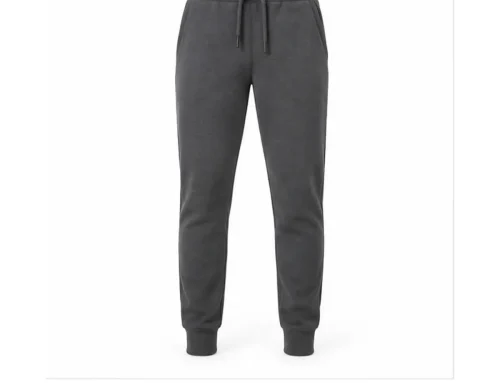
A jogger cuff should hold the intended shape without creating uncomfortable pressure, rubbing or repeated adjustment. Check it with the footwear and socks you normally use, then move through standing, sitting and walking. A flat cuff measurement alone cannot describe comfort.
Start with the cuff relaxed
Lay the joggers flat and examine both cuffs. Check whether they appear equal in width and height, the seam lies smoothly and the elastic or rib is not twisted. Record the flat opening according to a defined method without stretching it.
Look for uneven gathering where the leg joins the cuff. A visual difference between left and right should be measured and photographed rather than dismissed as handling.
Put on the intended footwear
Some cuffs are designed to sit above a shoe, while others rest closer to the ankle. Wear the relevant socks and shoes during the trial. Pull the joggers on without forcing the cuff over footwear that the garment was not designed to pass.
Check pressure and movement
- Stand naturally and identify where the cuff contacts the ankle.
- Walk several steps and notice rubbing or rotation.
- Sit on a chair and bend the knee, checking whether the cuff rides upward.
- Return to standing and see whether it settles without being pulled down.
Ask the wearer to identify the exact point of discomfort. “Cuff presses the front of the ankle while seated” is more useful than “too tight”.
Compare opening and recovery
Gently extend the cuff only enough to put the garment on as intended. Do not pull it to its maximum by hand. After wear, lay the joggers flat again and observe whether the opening has returned close to its original shape.
If numerical extension or recovery performance is required for a specification, agree on a test method. A casual wear check can reveal obvious problems but should not be presented as a laboratory result.
Check the whole lower leg
A cuff can feel tight because the calf or lower leg is already restrictive. Inspect pulling above the cuff and compare leg width. Increasing only the cuff opening may not fix a narrow lower-leg pattern.
Record size-set findings
Check more than the base size if the product will cover a broad size range. Record cuff opening, cuff height, lower-leg width and wearer feedback. Confirm whether the cuff measurement is graded between sizes.
Compare men’s joggers and use our cargo pants versus joggers guide for the wider garment decision.
About the author : attirings@gmail.com

Related Posts